Most people don’t think twice about how they sleep—until their neck starts complaining every morning. If you have cervical spondylosis, that morning stiffness isn’t just bad luck. The position you hold for hours each night can either give your neck a chance to recover or quietly make things worse. Getting your cervical spondylosis sleeping position right is one of the simplest things you can do to feel better—and it doesn’t require a doctor’s visit to start.
The honest truth? No sleeping position will reverse cervical spondylosis. But a good neck pain sleeping posture can absolutely take the edge off, reduce that groggy, aching feeling in the morning, and help you actually rest instead of waking up more sore than when you went to bed.
What Makes a Sleeping Position Good or Bad for Cervical Spondylosis?
Your neck stays in roughly the same position for six to eight hours every night. If it’s bent, twisted, or unsupported for that long, your joints and muscles will let you know about it by morning.
What you’re after is a neutral spine—your head, neck, and back lined up naturally, without any awkward angles. And here’s something people often overlook: your pillow can make or break this. Too flat and your neck droops. Too thick and your head cranes forward. Both keep the muscles working when they should be resting.
The Best Sleeping Positions for Cervical Spondylosis
Sleeping on Your Back
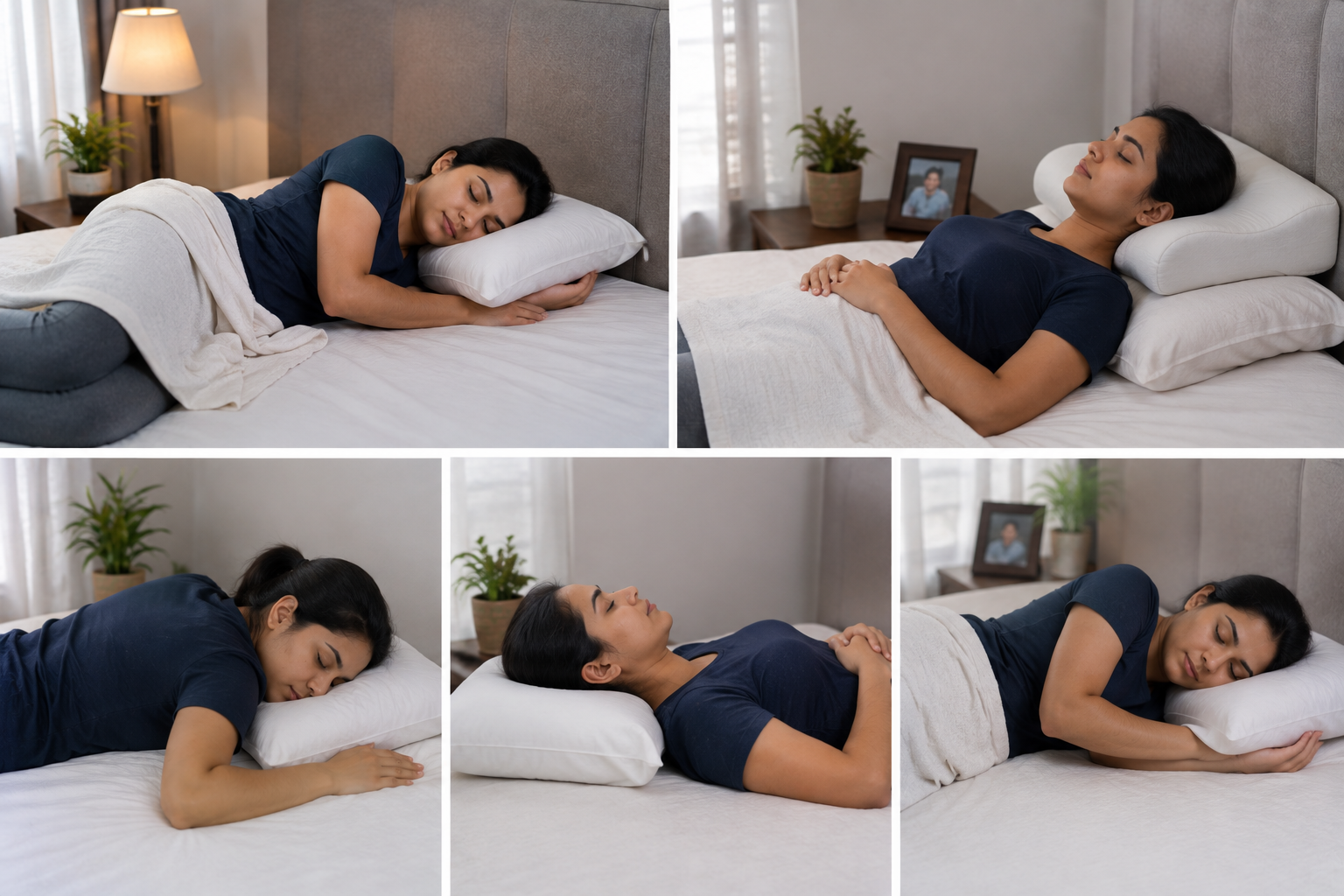
Back sleeping is hands-down the most recommended cervical spondylosis sleeping position. When you’re flat on your back, your weight distributes evenly and your neck can settle into a natural resting position without being pushed or pulled in any direction.
A few things that actually help:
- Use a cervical contour pillow—it’s shaped to support the curve of your neck rather than just propping your head up
- Put a pillow under your knees too; it eases lower back tension and keeps your whole spine happy
- Skip the big fluffy pillows—they shove your head forward and undo all the good work
Sleeping on Your Side
Side sleeping is a close second, and for a lot of people it feels more natural than lying flat. The key is getting a pillow at the right height—one that fills the gap between your head and shoulder without tilting your neck either up or down.
A few things to keep in mind:
- Your ears, shoulders, and hips should be in a straight line—not a curve
- A firm or medium-firm pillow holds its shape through the night better than a soft one
- Hugging a body pillow stops you from rolling forward and twisting your neck while you sleep
The Sleeping Position to Avoid: Stomach Sleeping
Stomach sleeping is rough on anyone’s neck, but it’s especially problematic when you have cervical spondylosis. To breathe while lying face down, you have to crank your head to one side—and keep it there for hours. That kind of sustained rotation puts real stress on cervical joints and soft tissue that are already under pressure.
If you’re a committed stomach sleeper, breaking the habit takes time. Try placing a pillow along your side to make rolling over less comfortable. Most people find it starts to click within a few weeks.
Other Neck Pain Sleeping Posture Tips Worth Knowing
Your neck pain sleeping posture is the big one, but a few other things can support it:
- Mattress firmness: Medium-firm is usually the sweet spot—soft mattresses let you sink in ways that throw off your alignment, while overly firm ones don’t give enough
- Getting out of bed: Roll to your side first, then use your arms to push yourself up. Sitting straight up from flat puts more strain on your neck than you’d think
- Pillow material: Memory foam and latex hold their shape overnight. Traditional fiberfill tends to compress and shift, which means the support you had when you lay down isn’t quite there by 3 a.m.
Finding the Right Support for Cervical Spondylosis
Sorting out your sleep setup is a great first step, but it works best alongside a broader plan. If your neck pain keeps disrupting your sleep, or if you’re noticing symptoms spreading into your arms, it’s worth talking to someone. Cyson offers physiotherapy and pain management programs built specifically for conditions like cervical spondylosis—so instead of guessing what might help, you get a structured, evidence-based plan that actually addresses what’s going on.