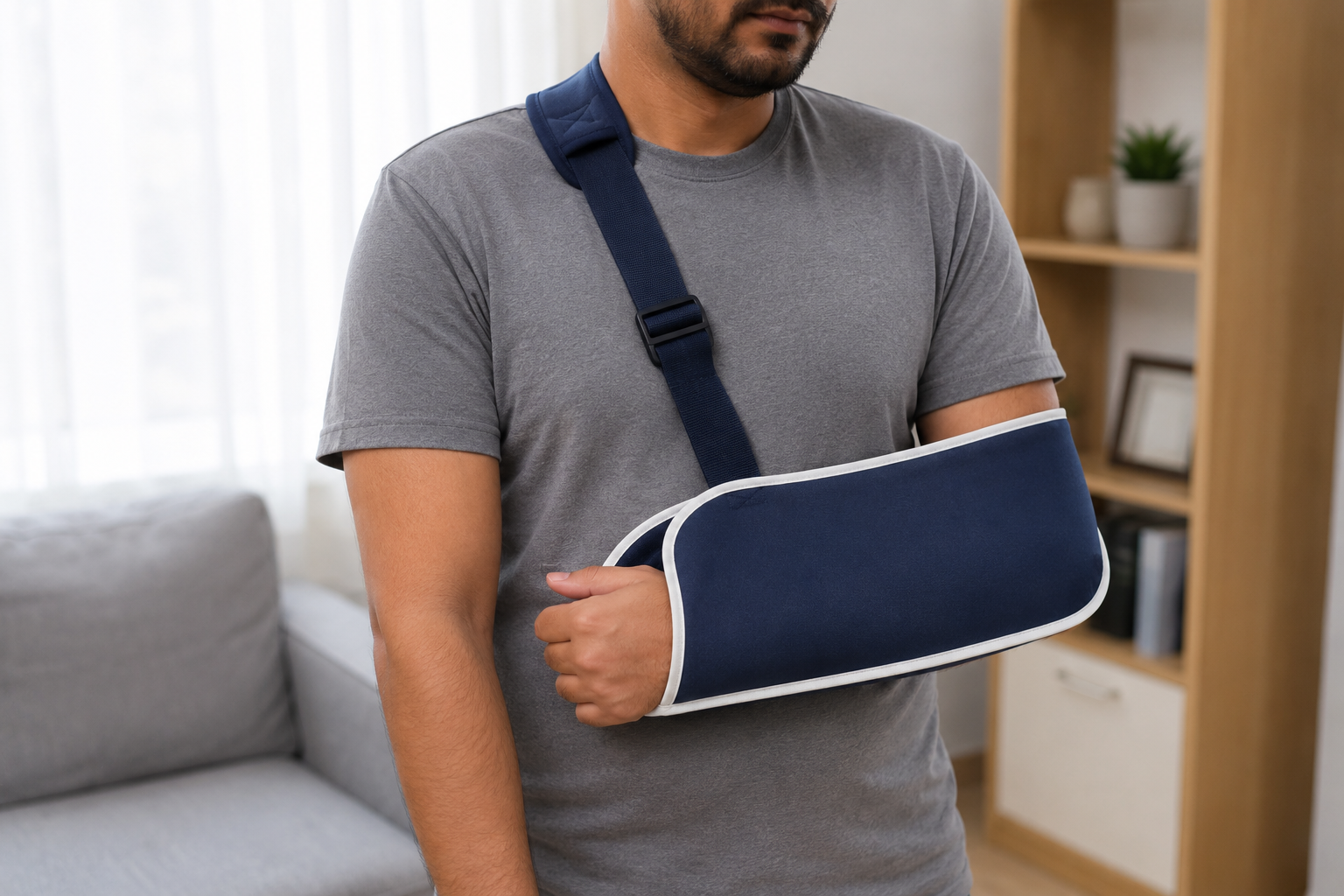
A shoulder injury that occurs suddenly could instantly alter the routine of your life. Simple tasks such as pouring a cup of tea, working on your laptop, and even dressing yourself can become huge difficulties. If you go to an orthopaedic doctor in the event of a shoulder injury, one of the primary pieces of equipment they’re likely to suggest will be an arm sling belt for shoulder support.
Although it appears to be something simple, a pouch made of cloth that is held by a specially designed arm support belt can be a vital therapy tool. It is more than “hold your arm.” It stabilises complicated joint structures, helps prevent the tissue from tearing further and also speeds up the process of healing.
What is an Arm Sling Belt for Shoulder Support?
Before exploring specific medical situations, it is helpful to know the most effective arm sling belt for shoulder support. The human shoulder is a joint made of a ball and socket, which has the widest mobility of any joint within the human body. But the incredible range of motion can be a drawback due to the inherent instability.
When muscles, tendons or bone around the shoulder have been affected when they are damaged, the load of the arm is pulled downwards by gravity. The constant downward pull creates strain on injured tissues, which causes intense pain and blocks an appropriate alignment during recovery.
An arm support belt is a way to counter gravity. Through transferring the burden of your upper and forearms onto your neck and lower back, the belt relieves your shoulders. The most modern orthopedic support products include the most ergonomic thumb loops, which prevent wrist drops, cushioned shoulder straps designed to help distribute the weight evenly and moisture-wicking, breathable fabrics specifically designed to last for a long time.
When Doctors Recommend an Arm Sling Belt for Shoulder Support
Doctors suggest the strategic use of a strap for the arm to provide shoulder support in several categories of injuries.
1. Rotator Cuff Tears and Tendonitis
The rotator cuff is made up of four muscles and tendons which keep the upper arm bone secure within the socket of your shoulder. It doesn’t matter if you have an injury from lifting something heavy or an ongoing tear-and-wear tendonitis; the muscles that are inflamed need to rest for a time.
A physician will typically advise the use of an arm support belt for the initial acute stage of a rotator Cuff injury. When you keep your arm in proximity to your body, the sling stops your arm from reaching up overhead or lifting heavy objects. These are activities can turn an injury to a tendon that is only partial to a full rupture.
2. Shoulder Dislocations and Subluxations
A dislocation happens if the head of the muscle (upper arm bone) is pushed completely out of its socket. Subluxations are a form of partial dislocation. A doctor will physically move the bone back to its original position (a procedure known as reduction). The ligaments surrounding it and the joint capsules are extremely stretched, loose, and prone to injury.
It is essential to wear the arm sling belt for shoulder support following a shoulder dislocation. It secures the ball within the socket, providing those ligaments that are stretched with the stability space they need to expand and repair. If the ligaments are not immobilized the likelihood of acquiring persistent shoulder instability is significantly increased.
3. Fractures of the Humerus, Clavicle, or Scapula
Some broken bones don’t require a plaster cast or urgent surgery. Fractures that do not break, but remain perfectly in alignment, are usually treated conservatively with premium orthopaedic support products.
- Clavicle (Collarbone) Fractures: The sling is used to support the burden of the arm to ensure that gravity isn’t pulling the arm downwards. This could pull the fractured pieces of the collarbone.
- Proximal Humerus fractures: The upper portion of the bone, which is attached to your arms, may break, particularly for older people, after an injury such as a fall. The arm support belt keeps the bone in a calm state and allows the body’s natural remodelling process to take place.
4. Severe Shoulder Sprains (AC Joint Separations)
The Acromioclavicular (AC) joint lies on the top of the shoulder. It is in the area where the collarbone joins the shoulder blade. Direct impact, for example, like the fall of a bicycle directly on the shoulder, could tear or strain the ligaments that support the joint. This can result in the condition known as a “separated shoulder.”
In the case of light or moderate AC joint injuries, an arm sling belt for shoulder support relieves the upward pressure of the humerus to the joint that is damaged, drastically alleviating acute pain for the initial few weeks following recuperation.
Post-Surgical Recovery and Orthopaedic Support Products
If the shoulder injury you have suffered requires surgery, such as an arthroscopic rotator-cuff repair or a labral repair (Bankart and SLAP lesions) or a complete shoulder replacement, the immobilisation is even more crucial.
After surgery, the repaired tendons or anchors are secured by medical sutures. Sudden or uncontrollable movements during your walk or sleep could cause a snapping of those sutures. The doctors rely on highly specialised orthopaedic support products in the initial 4 – 6 weeks after surgery.
For many cases of surgery, the standard sling may not be enough. Doctors will employ an abduction sling — an arm support belt that is fitted with a foam pillow, which is positioned between the elbow of your body and your hip. The pillow is positioned to keep the arm away from your body, which reduces the tension of newly healed ligaments and tendons, as well as maximises circulation of blood to the surgical area to accelerate the process of repairing cells.
The Benefits of Using a High-Quality Arm Support Belt
Utilising a poorly-designed or poorly-fitting sling could result in secondary problems that include serious neck strains, muscle knots in the back of the upper and skin irritations underneath the arm. Investing in high-end orthopaedic support products guarantees you get all the benefits of the immobilisation process:
- Relief from Pain: Through removing the force of gravity that is exerted over a damaged joint, a sling that is supportive sling provides instant, visible pain relief.
- Protection against accidental impact: When navigating crowded places or using public transport, the prominent arm sling belt serves as an indication to other people to allow you more space, safeguarding you from painful bumps.
- Swelling Control: The forearm slightly elevated when using a correctly adjusted sling can help prevent the accumulation of fluid (oedema) on the wrist and hand.
- Enhanced Quality of Sleep: A shoulder injury can be a challenge. A well-constructed arm support belt in bed can stop your arm from moving to painful positions over the course of the night.
Choosing Cyson for Your Recovery Journey
If you are recovering from a serious shoulder injury or planning for an orthopaedic procedure that is coming up, it is not a good idea to reduce the quality of your rehabilitation equipment. Supports of low quality can stretch in time, break along the seams or hold heat in, leading to a delay in healing and non-compliance.
Do not let an injury to your shoulder put you off the path of your daily routine. Make sure you invest in a device for recovery, which is a trusted choice for professionals and patients alike. Discover the entire assortment of Cyson products for orthopaedic support now and take the first step with confidence towards an uninhibited, pain-free rehabilitation.