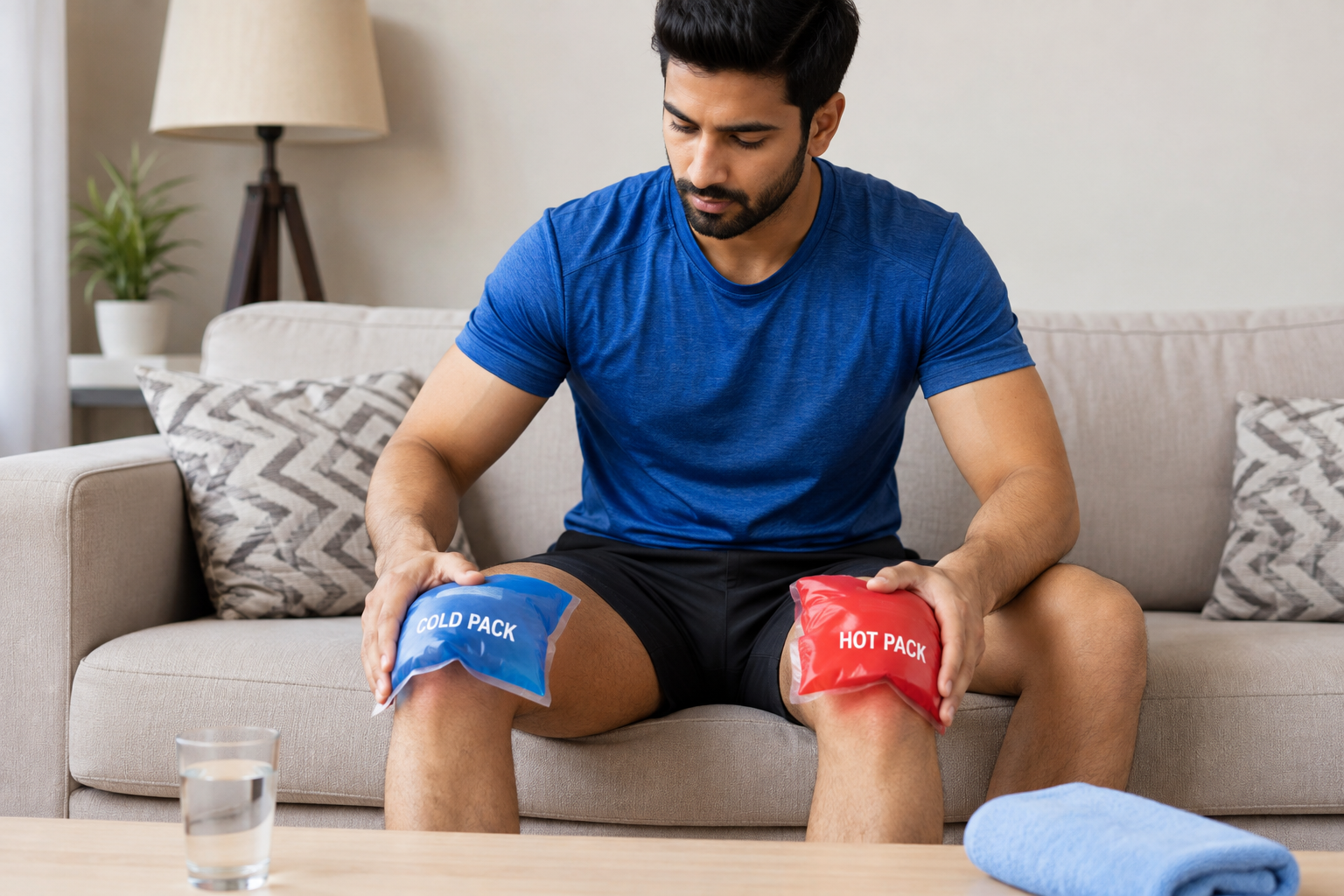
Here’s something most people get wrong: they grab ice or heat based on gut feeling—and end up slowing down their own recovery. If your knee is acting up, knowing whether to reach for a cold pack for knee pain or a hot pack can make a real difference in how quickly you heal.
So let’s clear this up once and for all.
What Does a Hot Pack Actually Do for Knee Pain?
Think of heat as a way to wake your muscles up. A knee pain hot pack draws more blood to the area, loosens tight tissue, and helps stiff joints move more freely. It’s not a fix for everything—but for the right kind of pain, it works really well.
Reach for a knee pain hot pack when you notice:
- That familiar morning stiffness that takes a while to ease up
- Ongoing aches from conditions like osteoarthritis or chronic muscle tightness
- Joints that genuinely feel better with a bit of warmth
One thing to keep in mind: if your knee looks puffy or swollen, skip the heat. Applying warmth to an inflamed joint will only make the swelling worse.
When Should You Use a Cold Pack for Knee Pain?
Cold does the opposite. A cold pack for knee pain slows blood flow, calms inflammation, and numbs sharp pain—which is exactly what you need after a fresh injury.
A cold pack for knee pain makes sense when you’re dealing with:
- A twist, sprain, or impact that just happened
- Swelling or puffiness after a hard workout
- Sudden flare-ups from bursitis or tendinitis
Wrap a cloth around the pack before applying it to your skin, and keep sessions to 15–20 minutes. Most experts suggest sticking with cold for the first 48–72 hours after an injury before introducing any heat.
Hot Pack vs Cold Pack: A Quick Side-by-Side
| Hot Pack | Cold Pack | |
| Best for | Chronic pain, stiffness | Acute injury, swelling |
| Effect | Boosts blood flow | Reduces inflammation |
| Best timing | After the first 72 hours | Within the first 72 hours |
| Skip if | Swelling or fresh injury | Stiff muscles, chronic ache |
So Which One Is Better for Knee Pain Treatment?
Honestly? That’s the wrong question. Neither is better across the board—it really comes down to your specific situation.
If you’ve just hurt your knee, go cold. The swelling needs to be managed first, and cold therapy does that well. If your pain has been lingering for weeks and your knee just feels stiff and achy, heat is your friend. It improves circulation and helps your joint loosen up.
Some people—especially those managing arthritis—find that using both works best. A warm pack before activity to loosen up, then cold afterward to keep any inflammation in check. It’s a simple routine, but it can be surprisingly effective as part of a knee pain treatment plan.
Getting the Right Help for Knee Pain Treatment
Hot and cold packs are a great starting point. They’re cheap, easy to use, and genuinely helpful when applied correctly. But they’re not a long-term solution on their own.
If your knee pain keeps coming back, gets worse, or starts affecting how you move through your day, it’s time to get a proper look at what’s going on underneath.
Cyson offers physiotherapy and pain management support tailored to your specific needs. Instead of guessing between a hot pack and a cold pack, you’ll have a clear plan—one built around the actual cause of your pain, not just the symptoms.