Pain has a way of making small things feel enormous. Tying your shoes. Standing up from a chair. Rolling over at 2 a.m. without waking yourself up with a gasp. If your lower back or pelvis has been giving you trouble, you’ve probably already tried a few things. An SI joint belt might not be on your list yet — but it probably should be.
This guide cuts through the noise and helps you figure out what to look for, when to use one, and whether it’s even the right fit for what you’re dealing with.
What does an SI joint belt actually do?
Most people have never heard of their sacroiliac joints until those joints start causing problems. They sit right where your spine connects to your pelvis — two small joints doing a very big job. They don’t bend or flex the way your knees do. Their whole purpose is to absorb impact, transfer load between your upper and lower body, and keep everything stable underneath you.
When they start slipping out of rhythm — moving too much, or unevenly — the pain can spread fast. Into your hips. Down your legs. Deep into your glutes.
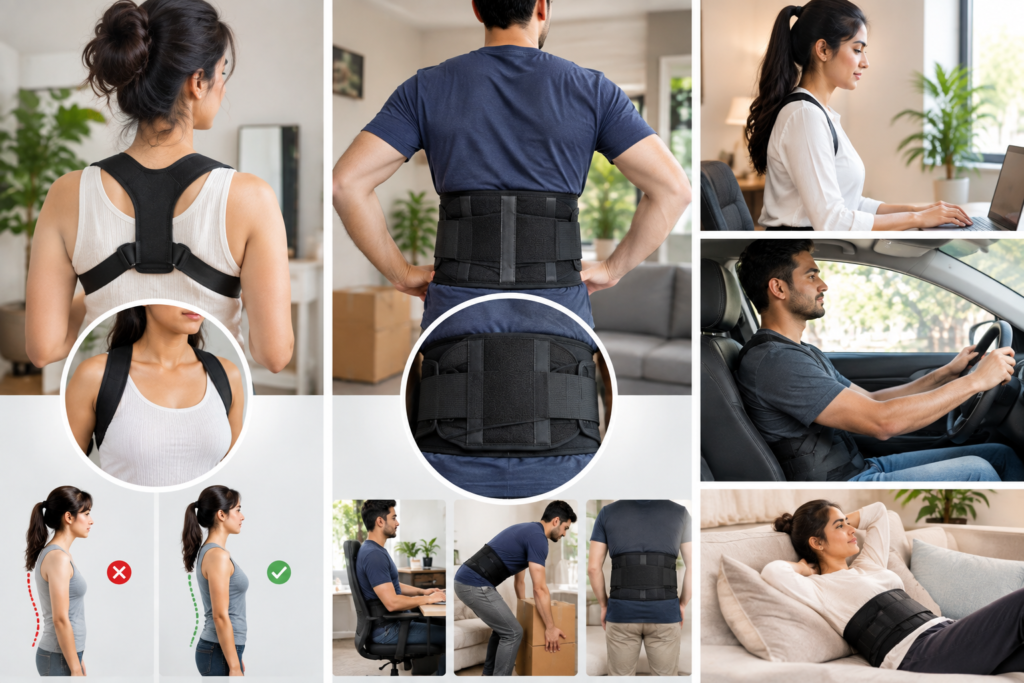
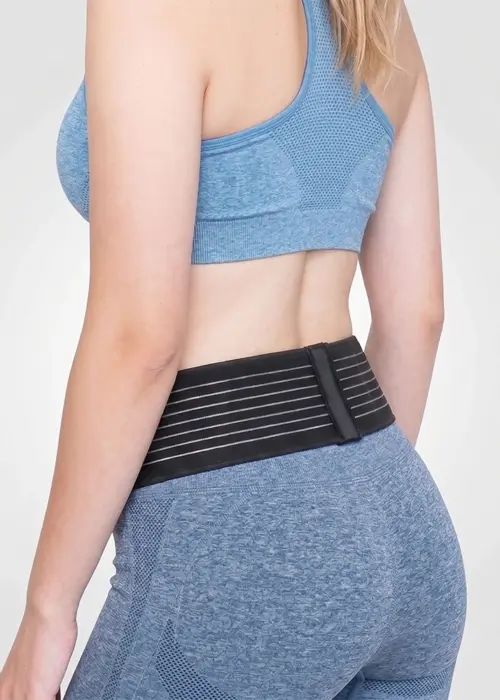
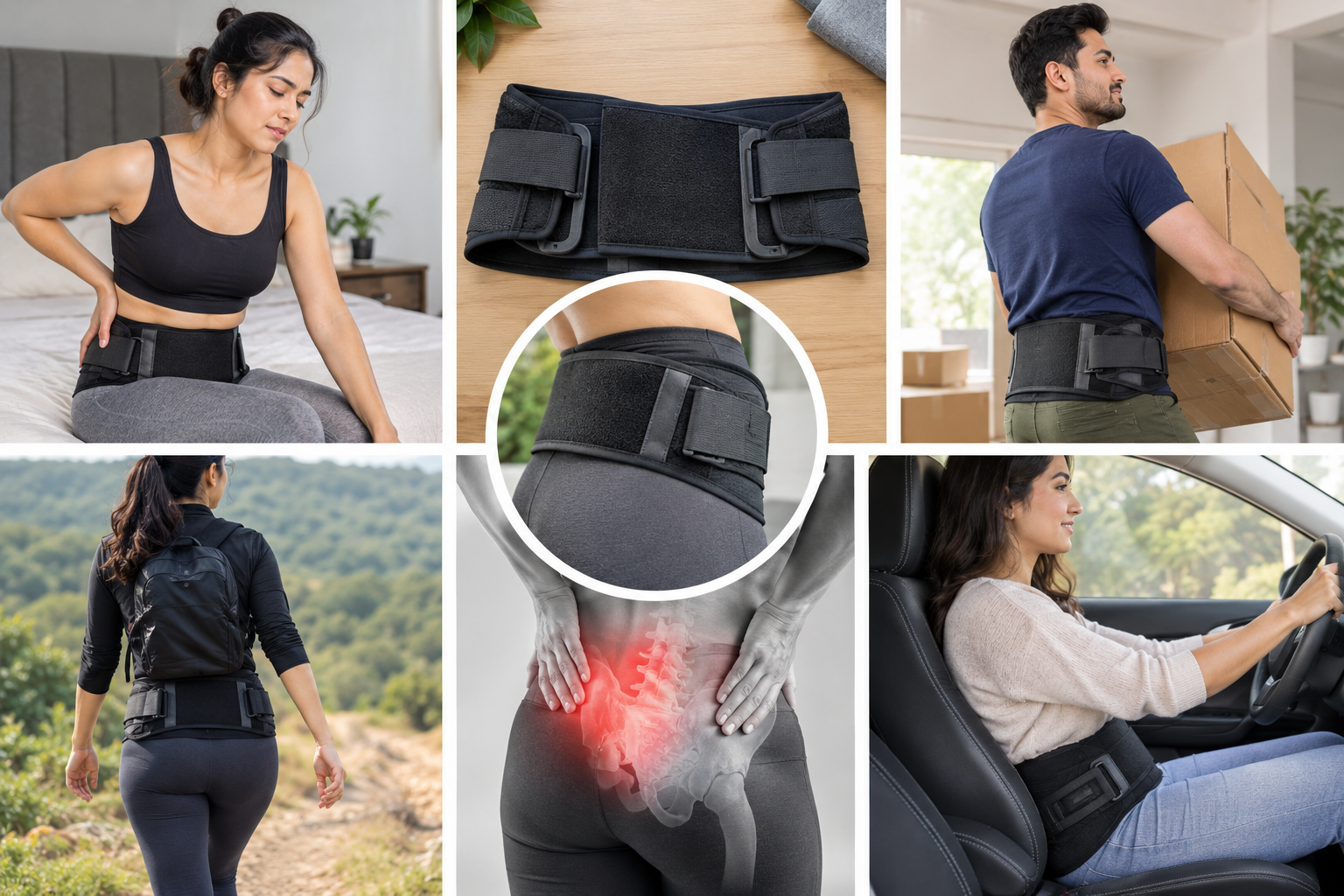
A sacroiliac belt wraps around that area and applies gentle, steady compression. It’s not a cure. It’s not going to fix whatever’s causing the instability. But it gives your pelvis a more reliable base to work from, and for a lot of people, that’s enough to make the day feel manageable again.
How do you choose the right belt for hip joint pain?
Walk into any pharmacy or scroll through any medical supply site and you’ll find more options than you probably expected. Here’s what’s actually worth paying attention to:
- Width and coverage: Wider belts — around 2 to 4 inches — spread the compression across a bigger surface area, which works well if your pain is more spread out. Narrower belts focus more directly on the SI joint itself. Start by thinking about where your pain actually is.
- Adjustability: Your body isn’t static. By the end of a long day, you might need more or less compression than you did in the morning. Adjustable straps let you adapt without taking the belt off entirely.
- Material: If you’re wearing a belt for hip joint pain for hours at a stretch, breathable fabric isn’t a luxury — it’s a necessity. Look for something moisture-wicking, especially if you’re active or live somewhere warm.
- Rigidity: For a new or acute flare, semi-rigid construction gives you more structure and control. For something you’ve been managing for months, a softer, more flexible belt tends to be less intrusive and easier to wear consistently.
The honest answer is that the best belt is the one you’ll actually wear. Comfort and fit matter as much as specs.
When should you wear an SI joint belt?
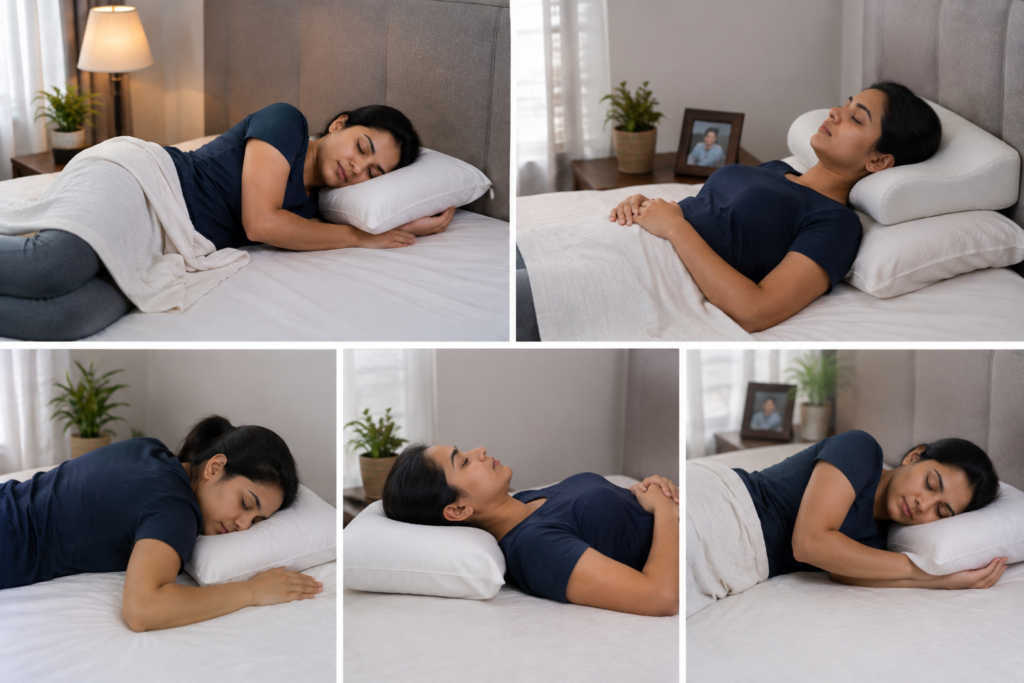
Wear it when you need it most — during the activities that reliably set off your pain. That usually means standing for long periods, walking any real distance, going up stairs, or lifting. If getting out of bed is its own painful process, some people find it helpful overnight too.
One thing worth being aware of: if you wear your sacroiliac belt constantly, around the clock, the muscles around your SI joint can get used to having that external support and gradually do less work on their own. That’s not a reason to avoid the belt — it’s a reason to pair it with something else. Light stretching, some targeted core work, whatever movement your body can handle. The belt and the exercise together will get you further than either one alone.
Is an SI joint belt right for sciatica?
Sciatica is one of those words that gets applied to a lot of different situations. The pain is real — that electric, shooting sensation that travels down your leg — but what’s causing it matters a lot when it comes to choosing the right solution.
One common source that often gets overlooked: an unstable or inflamed SI joint. When the pelvis isn’t moving the way it should, it can put pressure on the sciatic nerve and send pain radiating downward. In those cases, an SI joint belt for sciatica can make a noticeable difference. Stabilize the pelvis, reduce the irritation, and give the nerve room to calm down.
A few patterns that suggest your sciatica might be coming from the SI joint: pain that spikes when you stand on one leg, shifts when you roll over in bed, or flares up with prolonged walking. Sound familiar? Worth exploring.
That said, sciatica can also come from a herniated disc, spinal stenosis, or other causes entirely — and in those cases, a sacroiliac belt won’t do much. If you’re not certain what’s behind your symptoms, it’s worth getting an opinion from a physiotherapist or orthopedic specialist before you commit to a particular approach.
Find support that moves with you
Finding the right SI joint belt isn’t just about reducing pain. It’s about getting back to your day without that constant, low-level dread of the next wrong movement. That matters. You deserve to move through your life with confidence — not caution.
Cyson’s range of SI joint belts and sacroiliac belt options are designed with exactly that in mind — real comfort for real people, built around everyday life. Whether you’re navigating an SI joint belt for sciatica or searching for a dependable belt for hip joint pain, the support you find here is made to work with your body, not against it. Because the right help should be straightforward to find, and available to everyone who needs it.