
Wear your SI joint belt during activities that aggravate your pain — not around the clock; start with 2-hour sessions when symptoms flare, position it over your pelvic bones, and keep the fit snug but comfortable. Take it off before bed and before any core-focused training.
SI joint pain has a way of creeping into moments you’d never think twice about. Getting up from a chair. Walking across a parking lot. Sitting through a long meeting without shifting every few minutes. An SI joint belt can genuinely help during those moments — but it needs to be worn correctly. Get the fit or timing wrong and you’ll either get no benefit, or make things harder on yourself.
Here’s the practical breakdown.
Why an SI Joint Belt Helps with Back Pain
Your SI joints link the sacrum to the iliac bones on either side of your pelvis. It’s not a large joint, but it handles a surprising amount of daily load. When it becomes unstable or inflamed, the pain tends to spread — across the lower back, into the hips, sometimes down the leg.
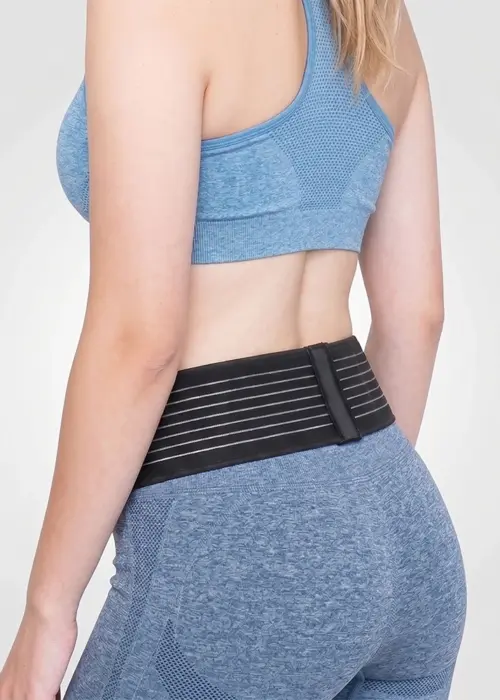
An SI joint belt wraps firmly around the pelvis and draws the joint back toward a more stable position. Your surrounding muscles no longer have to compensate quite so hard. One way to picture it: the belt acts like temporary scaffolding while your body is still working through recovery. It’s support, not a solution.
When Should You Wear an SI Joint Belt?
Wear it for specific activities, not as a daily default; reach for your SI joint belt when something in your day puts real demand on the joint:
- Walking longer distances or climbing stairs during a flare-up
- Physical therapy sessions where extra joint stability helps you move safely
- Long stretches at a desk, especially if your chair doesn’t support your lower back well
Keeping the SI joint belt for high-strain moments preserves its effectiveness — and keeps your muscles in the habit of doing their own work the rest of the time.
How Long Should You Wear an SI Joint Belt?
Your muscles still need to engage and strengthen. Wear the SI joint belt for too long and you start offloading work from the structures that need to get stronger.
- Start at 2 hours. During painful flare-ups, limit sessions to 2-hour windows so your muscles don’t switch off entirely.
- Extend only when it makes sense. Once you’re more comfortable, 3–4 hours during demanding activity is reasonable. Pay attention to how your body responds rather than watching the clock.
- Remove it for sleep and core training. Nighttime wear limits how freely you move during rest. Wearing it through core exercises also defeats the purpose — those exercises exist to build the support your joint needs.
Short, deliberate sessions across the day will serve you better than leaving it on from morning to night.
How to Position an SI Joint Belt Correctly
Incorrect placement is probably the most common mistake people make — and it’s where the belt stops doing its job.
- Place the SI joint belt directly over your hip bones, below your waist. It shouldn’t be sitting across your lower spine.
- Fasten the Velcro until it feels firm and supportive — but not so tight it digs in or makes deep breathing uncomfortable.
- Put it on while you’re standing upright. Fitting it while already slouched sets the whole thing crooked from the start.
- During heavier tasks like lifting, you can tighten it slightly. When you’re sitting quietly or resting, loosen it so it’s not cutting into circulation.
Get the placement right, stand tall while you’re wearing it, and the SI joint belt will actually compress what needs compressing — rather than just sitting in the wrong place doing nothing.
Used with some consistency, an SI joint belt can reduce discomfort during everyday activity and give your pelvis the stability it needs while you work toward longer-term recovery. To explore the Cyson SI Joint Belt and other back support options, visit www.cyson.in.