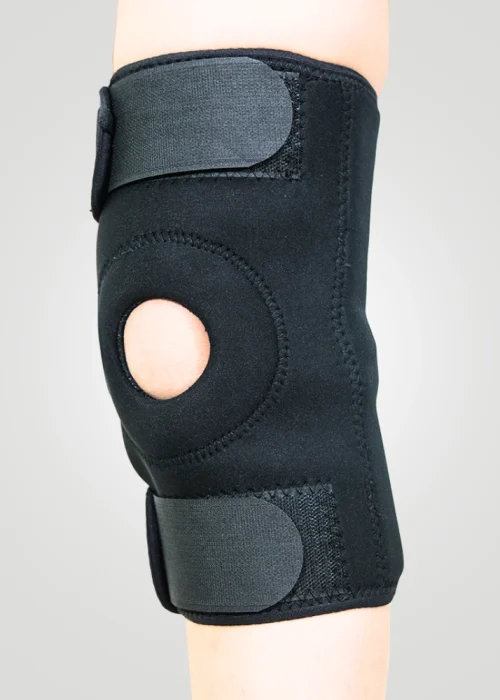

SI joint dysfunction happens when the sacroiliac joint — the link between your pelvis and spine — gets too stiff or too loose. Either way, pressure stops distributing evenly through your lower back and hips, and movement starts to hurt. Common triggers include poor posture, pregnancy, sports injuries, and leg length differences. A well-fitted SI joint support belt, used consistently alongside some targeted movement work, can genuinely change how you feel day to day.
A lot of people spend months dealing with lower back pain that doesn’t quite respond to the usual remedies. It disrupts sleep, chips away at your mood, and turns ordinary tasks — getting up from a chair, loading the dishwasher, walking any real distance — into something you have to think about. What’s often missed is that SI joint dysfunction is behind a surprisingly large share of these cases, and it gets misread as a lumbar problem more often than it should.
Your sacroiliac (SI) joint connects the base of your spine to your pelvis. When it’s off — whether that means too locked up or too mobile — the symptoms don’t always point clearly at the pelvis. You might notice a dull ache after sitting through a long meeting, a sharp catch when you take the stairs two at a time, or that familiar stiffness that hits the moment you first stand up in the morning. A properly fitted SI joint support belt, worn consistently during the activities that set things off, can reduce enough of that daily strain to let you move without pain constantly pulling your focus.
What Is SI Joint Dysfunction?
SI joint dysfunction occurs when the sacroiliac joint becomes either too rigid or too unstable. Both create the same downstream problem: pressure stops spreading evenly across your lower back and hips, and your movement becomes guarded and restricted.
Many people end up treating this as a generic back problem for weeks before realizing the real source is the pelvic joint. That distinction matters more than it might seem — what helps a lumbar disc issue can do absolutely nothing for SI joint irritation, and sometimes makes it worse.
An SI joint support belt works by applying compression to the joint area, which dampens the small repetitive micro-movements that keep the joint agitated and stop it from settling.
What Causes SI Joint Dysfunction? Common SI Joint Problems Explained
SI joint dysfunction rarely has a single clear cause. It usually develops from accumulated mechanical stress over time. The most common contributors:
- Poor posture and prolonged sitting — Sitting for hours at a computer or behind the wheel tilts your pelvis and causes the strain to be unevenly distributed to one side of the joint.
- Sudden lifting or twisting — something as quick as rotating while picking up a heavy bag can disrupt normal joint mechanics in an instant.
- Pregnancy and childbirth — the hormone relaxin loosens pelvic ligaments significantly during pregnancy, and the joint can stay underprotected for months after delivery.
- Athletic overuse or impact — distance runners, cyclists, and contact sport athletes regularly develop SI joint irritation from repetitive, asymmetrical loading patterns.
- Leg length discrepancy — even a difference of 5–7mm changes how force travels through the hip and pelvis with every step.
When any of these factors are in play, an SI joint support belt provides real mechanical support while you work on addressing what’s actually driving the problem.
SI Joint Pain Symptoms to Watch For in SI Joint Dysfunction
Catching SI joint pain symptoms early gives you a much better shot at a faster recovery. Pay attention to:
- A dull or sharp ache in the lower back, one hip, or across the pelvis — usually one-sided rather than central
- Tenderness in the buttock that travels into the upper thigh (worth noting: this isn’t sciatica, which typically runs past the knee)
- Stiffness after sitting for 30 minutes or more, particularly that first moment when you stand up
- Pain when climbing stairs, rolling over in bed, or loading one leg fully
SI joint pain symptoms that haven’t shifted within two weeks are worth taking seriously with proper SI joint treatment. The longer they go unaddressed, the more the surrounding muscles start compensating — and those compensation patterns make recovery considerably messier.
Best SI Joint Support Solutions for SI Joint Relief
Effective SI joint treatment rarely comes from one source alone. Depending on how pronounced your symptoms are, here’s what tends to actually work:
- Targeted strengthening — glute bridges and clamshells are a solid starting point. They build support around the joint without loading it directly.
- Movement and posture retraining — adjusting how you sit, how your workstation is set up, and how you walk removes the repetitive stress that keeps the joint aggravated.
- Mechanical support with an SI joint support belt — particularly useful during active flare-ups, pregnancy-related instability, or jobs that involve sustained standing or physical load.
If your symptoms are mild and recent, movement-based work may be enough. Bring in the support belt when pain is actively disrupting your day or you’re spending long periods in physically demanding situations.
Why Use an SI Joint Support Belt for SI Joint Dysfunction?
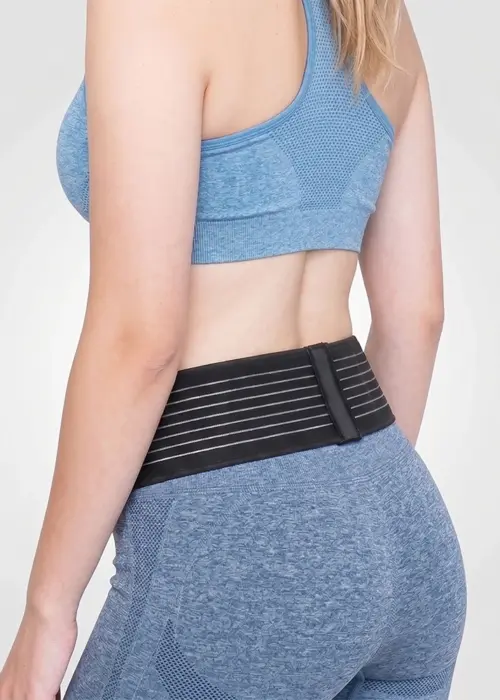
An SI joint support belt wraps around the pelvis at the joint level and provides focused compression, which helps to keep the joint surfaces in better alignment. That takes load off the surrounding ligaments and muscles — which is exactly what they need to start recovering.
Here’s what a well-made SI joint support belt can realistically do for you:
- Pelvic stability during movement — the joint stays better positioned when you shift your weight or change direction, rather than micro-shifting with every step.
- Less pain during activity — most people find they can walk or stand for longer before discomfort builds the way it used to.
- Posture reinforcement — wearing the belt consistently acts as a physical cue to maintain better alignment, especially during long stretches at a desk.
- A cleaner recovery window — when the joint isn’t being re-irritated constantly, SI joint treatment approaches like physiotherapy and targeted exercise actually have room to work.
Wearing your SI joint support belt during activities that consistently trigger your SI joint pain symptoms — rather than all day every day — tends to produce the most consistent results.
How to Use an SI Joint Support Belt in Daily Life for SI Joint Dysfunction
Getting the most from your SI joint support belt comes down to fit and timing. Position it across the widest part of your hips — firm enough to feel supported, but not so tight it restricts your breathing or circulation. Put it on before the activities that reliably set things off: a long commute, a day on your feet, extended lifting, or any sustained physical work.
Pairing the belt with professional SI joint treatment — physiotherapy, chiropractic care, or a structured home program — consistently delivers better outcomes than either approach on its own. Used regularly during high-risk activities, your SI joint support belt can meaningfully cut down how often flare-ups occur and how severe they are when they do.
Managing SI Joint Dysfunction Starts With the Right SI Joint Treatment
SI joint dysfunction responds well to consistent, targeted care. It doesn’t have to be a long-term problem. A reliable SI joint support belt, paired with a genuine SI joint treatment plan, gives the joint the stability it needs to recover while keeping you functional through the process — rather than waiting on the sidelines.
If persistent SI joint pain is affecting your daily life, don’t keep pushing it off. For trusted quality and ease of use, choose Cyson.